

Foundation options for modular buildings
Foundation options for modular buildings
Modular buildings arrive on site as complete units, precision-engineered and virtually ready to use.
However, their success and longevity rely heavily on the foundations they’re placed on.
Without the right support, modules can swiftly develop serious problems, from leaks to structural issues that risk ongoing problems with windows, doors, and other fittings.
Every support point needs to be perfectly level. If not, the sections simply won’t align properly.
In this guide, we’ll take a closer look at the different types of foundations suitable for modular buildings, from traditional concrete bases to modern ground screws.
We’ll also share practical installation advice and real-world examples to help you install modular buildings perfectly – and avoid unnecessary problems down the line.
Every great building project starts with laying solid foundations, and modular construction is no different.
Even small errors in the foundation can lead to big problems for your build, including:
Whether you’re setting up a small garden office or a large multi-unit complex, laying accurate, durable foundations is critical to ensuring your modular building functions as intended and stands the test of time.
So what are your foundation options?
Modular buildings need solid, longlasting foundations, but choosing between the available systems can be complex.
Let’s examine how each option works in practice, along with their strengths and limitations.
The most straightforward foundation uses pre-cast concrete blocks or poured concrete pads. Installers place these at regular intervals around the building’s footprint, typically at corner points and along main beams.
While simple in theory, these foundations bring several challenges:
Many temporary buildings start life on concrete blocks because they’re quick to place. But this apparent simplicity often leads to problems with doors sticking and floors becoming uneven as blocks settle at different rates.
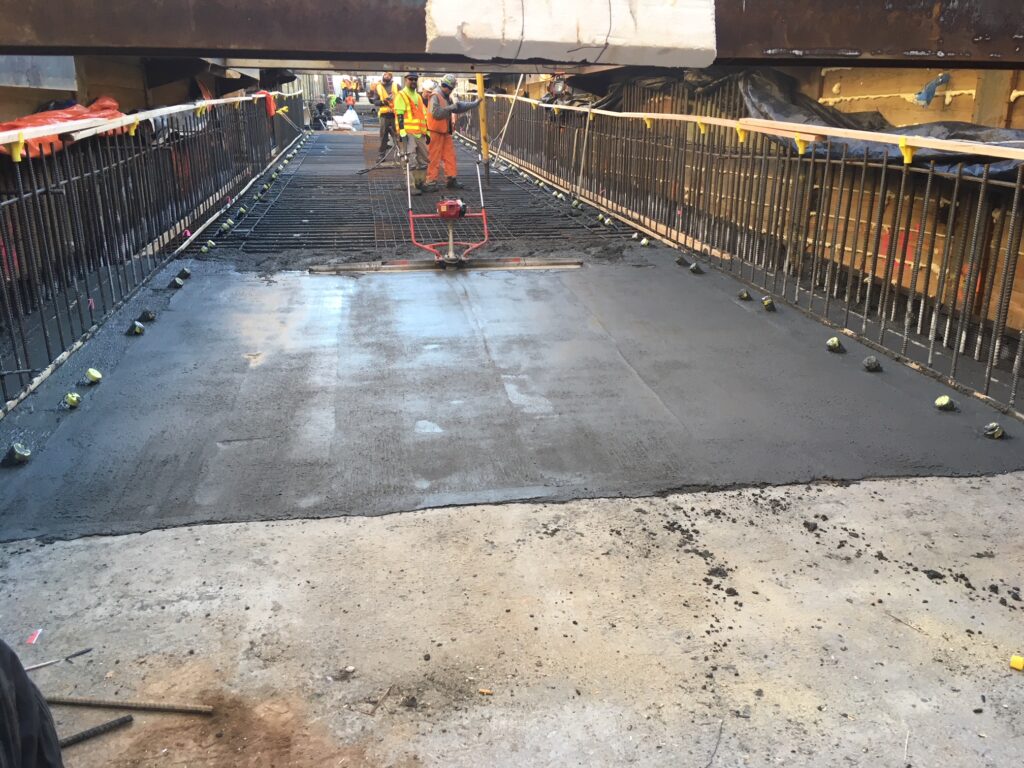
Ring beam foundations create a continuous concrete support around the building’s perimeter. This involves:
A well-built ring beam provides excellent stability and load spreading.
However, getting levels perfect during the concrete pour requires considerable skill. The process also involves significant groundwork, multiple contractor visits, and often weather delays.
Jack pad systems combine concrete pads with adjustable steel supports. They offer some flexibility for leveling and can handle moderate ground slopes.
Commonly used under temporary classrooms and site offices, they provide a middle ground between basic blocks and full foundations.
However, they still need:
Steel plates spread loads across larger areas, making them useful on softer ground.
They work particularly well for temporary installations where ground preparation is limited. Modern versions often include integral leveling systems.
Limitations include:
Ground screws offer an alternative solution and have become hugely popular for modular construction.
Each screw is secured deep into the ground, providing a precise mounting point that can be adjusted for perfect levelling.
The typical ground screw system includes:
The key advantages here are speed and precision. Installation often takes just hours, and the adjustable brackets mean you can achieve perfectly level foundations even on challenging sites.
Ground screws offer rapid installation and robust yet precise structural support – exactly what modern modular buildings demand.
Here’s everything you need to know about what they are and how they work:
Each ground screw consists of a long steel shaft with helical (spiral) plates welded around them – resembling a giant screw. These plates allow the screw to be driven deep into the ground, anchoring it securely in place.
They come in various lengths and diameters to suit different soil conditions and structural requirements.
As the ground screw is rotated into place using a mechanical driver, the helical plates cut into the ground while compacting the displaced soil. The process creates a dense, stable foundation point that resists both downward pressure and lateral forces.
Each screw can be installed to a specific depth, ensuring consistent performance even in uneven or sloping terrain.
Once secured, the top of the screw connects to the modular building’s frame via mounting brackets. Brackets allow precise alignment adjustments to achieve a perfectly level foundation.
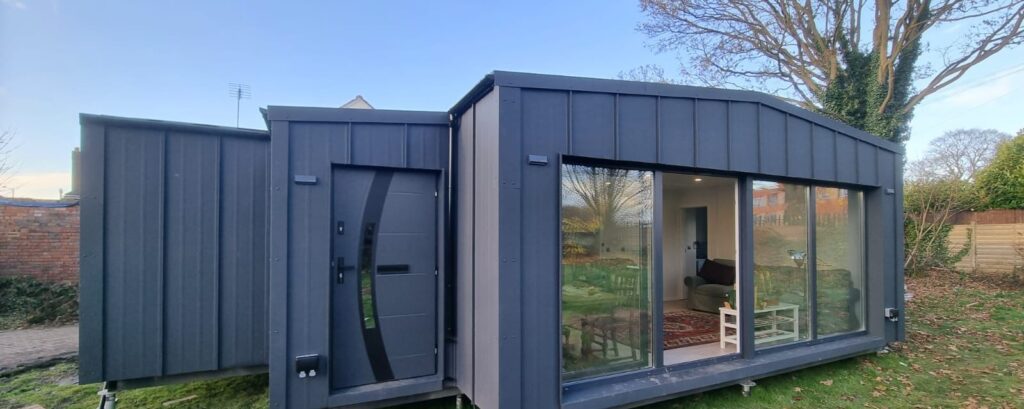
Ground screws are a reliable and practical foundation solution for modular construction, offering consistent support and versatility. Their key advantages include:
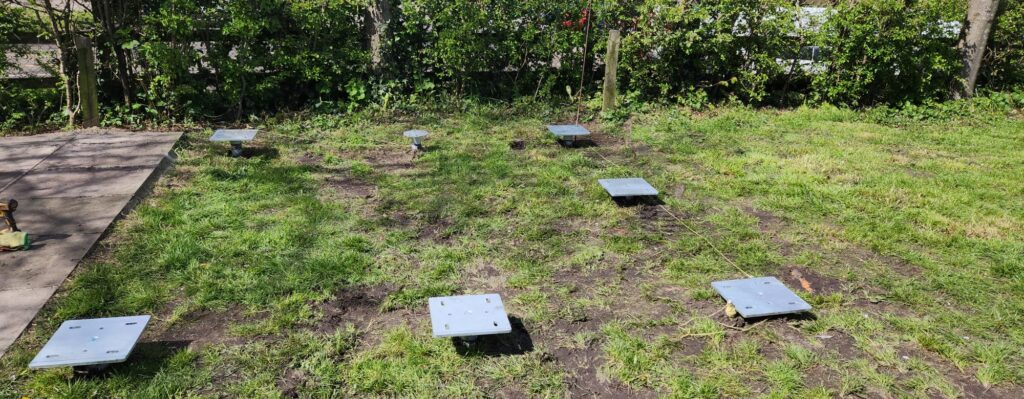
Ground screws are highly effective for modular buildings, mostly thanks to their adaptability and ease of installation.
They’ve become a go-to solution for sites where traditional foundations are disruptive, impractical, or forbidden by local authorities, but can offer benefits for any modular construction project.
Let’s take a look at some real-world examples where ground screws deliver exceptional results:
Modular school buildings have become a practical choice for many schools, especially in light of the RAAC concrete crisis, which also affected some hospitals.
Installing new classrooms or facilities on a busy school site isn’t easy – there’s limited space, strict deadlines tied to term dates, and the school day can’t just stop for construction!
That’s where ground screws come in, so why do they work so well for schools?
Another key advantage is flexibility. Schools often grow or change over time, and modular classrooms need to keep up.
Unlike concrete, with ground screws, buildings can be moved, expanded, or even removed without causing damage to the site.
Modular commercial buildings, whether they’re offices, retail spaces, or pop-up shops, need to be built quickly and with minimal fuss. Deadlines are often tight, and many projects are on active sites where disruption must be minimal.
With long installation times and site preparation requirements, traditional concrete foundations can cause delays and complications that ground screws solve. Here’s why they’re a superb choice:
Again, flexibility is a key advantage here. Modular commercial spaces are often changed or converted, whether it’s adding more units, relocating to a new site, or dismantling temporary structures.
Ground screws simplify these processes, essentially acting as a modular foundation counterpart to the buildings themselves.
Installing ground screws is relatively straightforward, but getting it right requires attention to detail at every stage. Since modular construction projects are quite complex and vary widely depending on the buildings in question, the site, ground, etc, professional installation is highly recommended.
Our domestic and commercial installation teams handle modular building projects of all sizes, from single units to large commercial developments.
Before any work starts, we conduct a thorough site survey to check:
On installation day, our team marks out each screw position precisely. Using specialised equipment, we drive each ground screw to the exact depth needed, then fit and level the mounting brackets. This creates perfect connection points ready to receive your modular building.
When it comes to making those vital final adjustments, our installers ensure each screw lines up with your building’s connection points, checking levels repeatedly throughout the installation.
We’ll also verify the load-bearing capacity of each screw, especially important for larger modular buildings or challenging ground conditions.
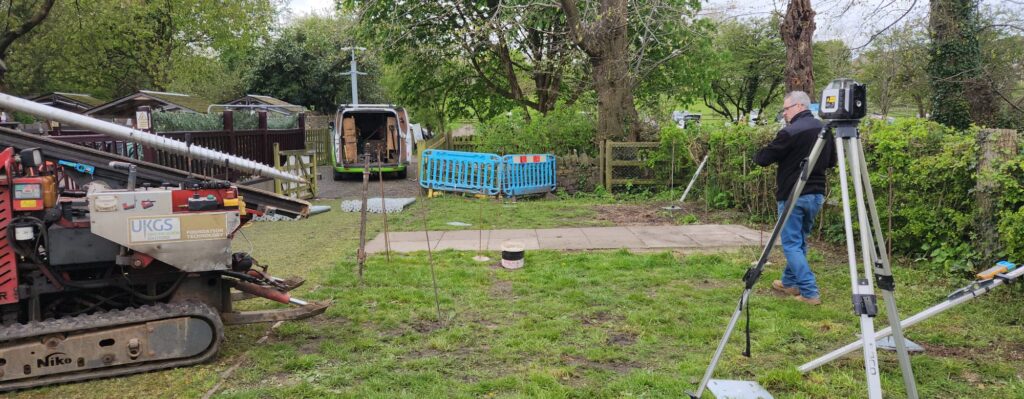
Ground screws have changed how we think about foundations for modular buildings, offering speed and precision that traditional methods struggle to match.
GSC brings 15 years of ground screw expertise to modular construction. Our nationwide teams ensure perfect foundations for your building, with every screw installed to exact specifications.
We handle projects of all sizes, from garden rooms through to major commercial developments, providing the same attention to detail at every stage. Full load testing and site assessments ensure your foundations perform exactly as needed.
Ready to start your project? Explore our complete range of ground screws and brackets, or contact the GSC team to discuss your requirements.