Home » Blog » Understanding Screw Piles: A Complete Guide

Screw Pile Foundations

Screw piles are engineered steel foundations designed to handle heavier loads and more demanding ground conditions than standard ground screws. We're one of the UK's leading screw pile specialists, with the stock, the expertise, and the nationwide installation capability to back it up.
They're the go-to solution for contractors, developers, and trade professionals working on commercial builds, infrastructure, and large-scale residential projects where certified performance and installation speed matter.
At Screw Foundations UK, we design, supply and install screw pile foundation systems nationwide, backed by over 15 years of hands-on experience and a complete turnkey service – from pile design through to installation, torque monitoring, and certification.

How Screw Piles Work

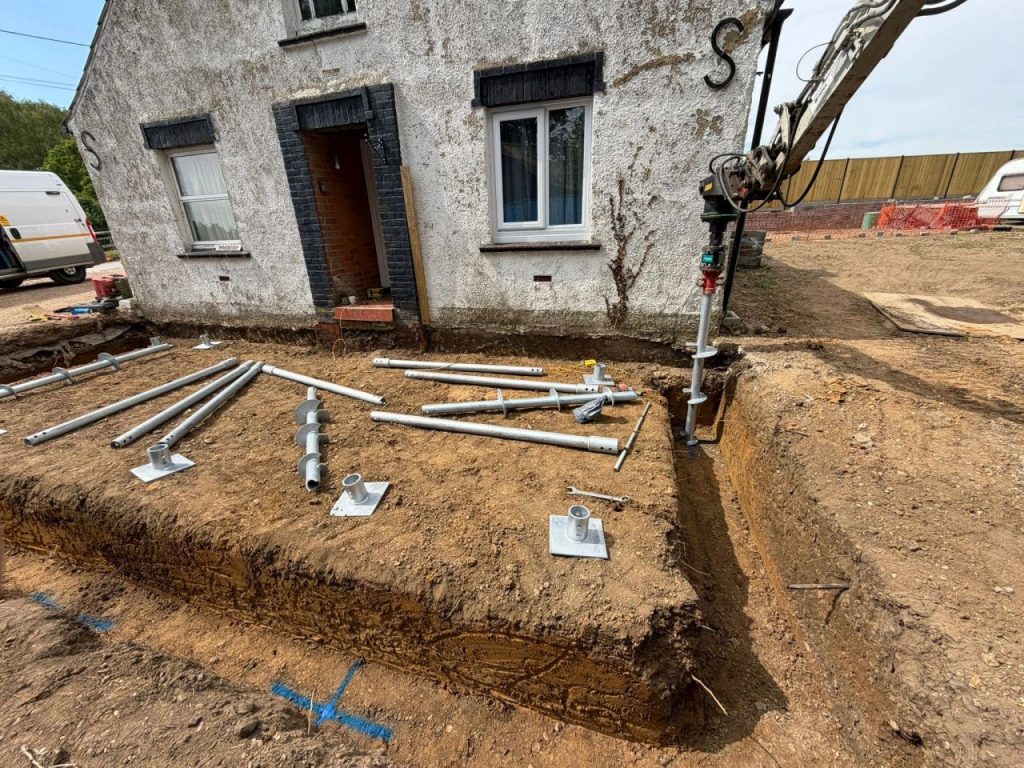
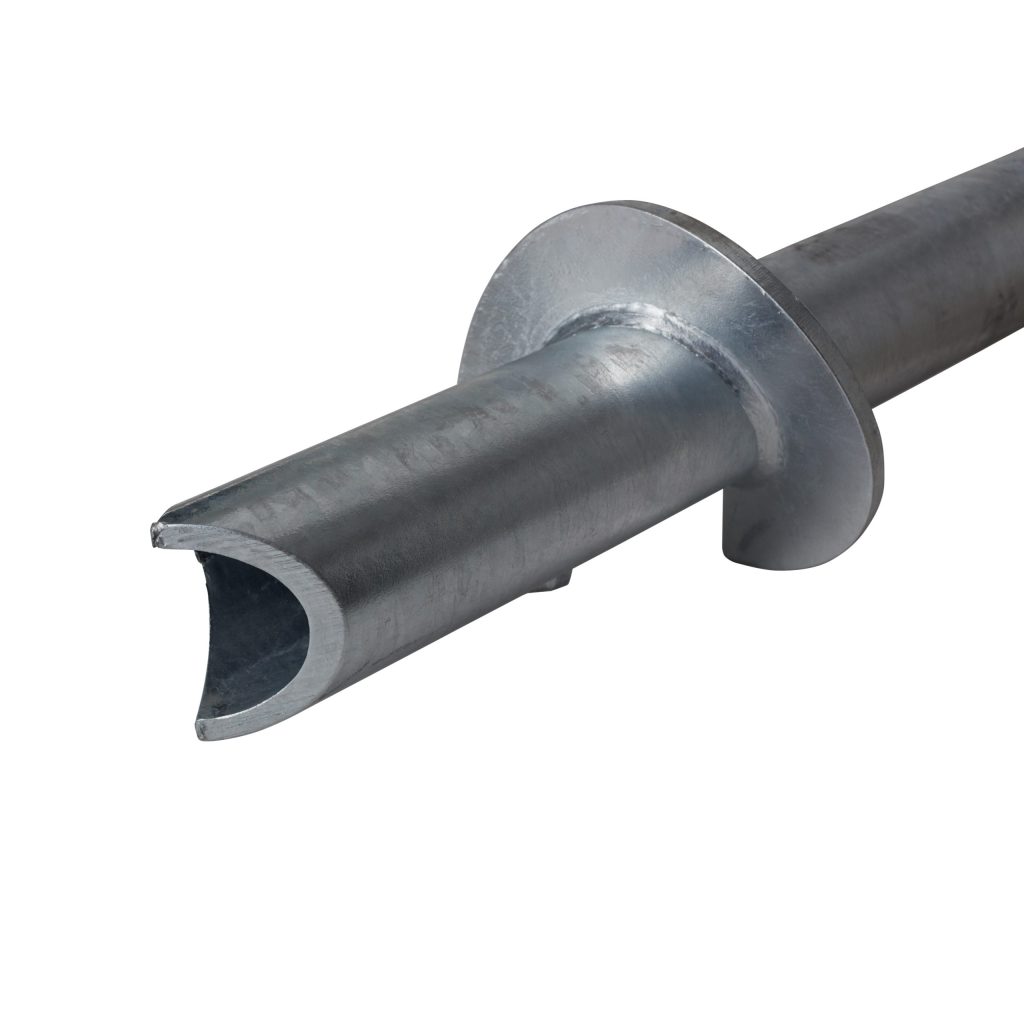
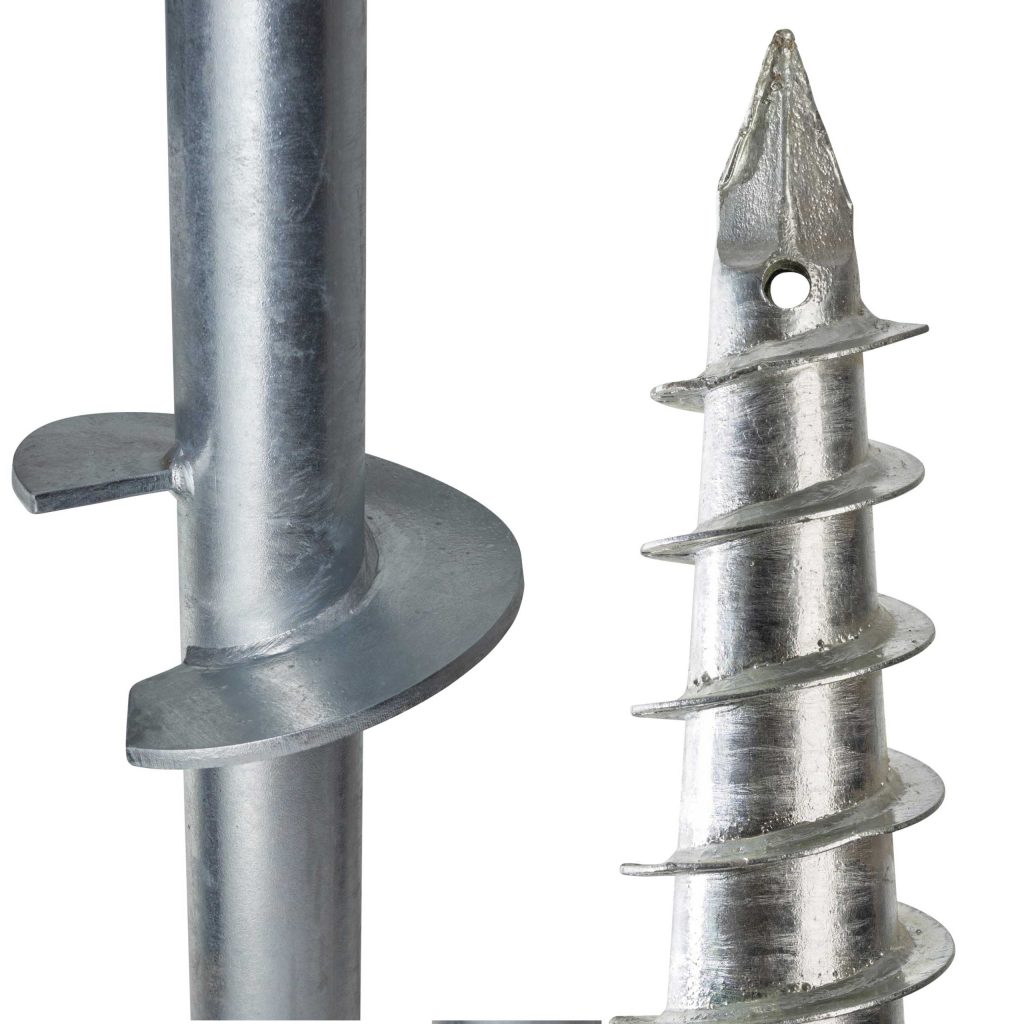
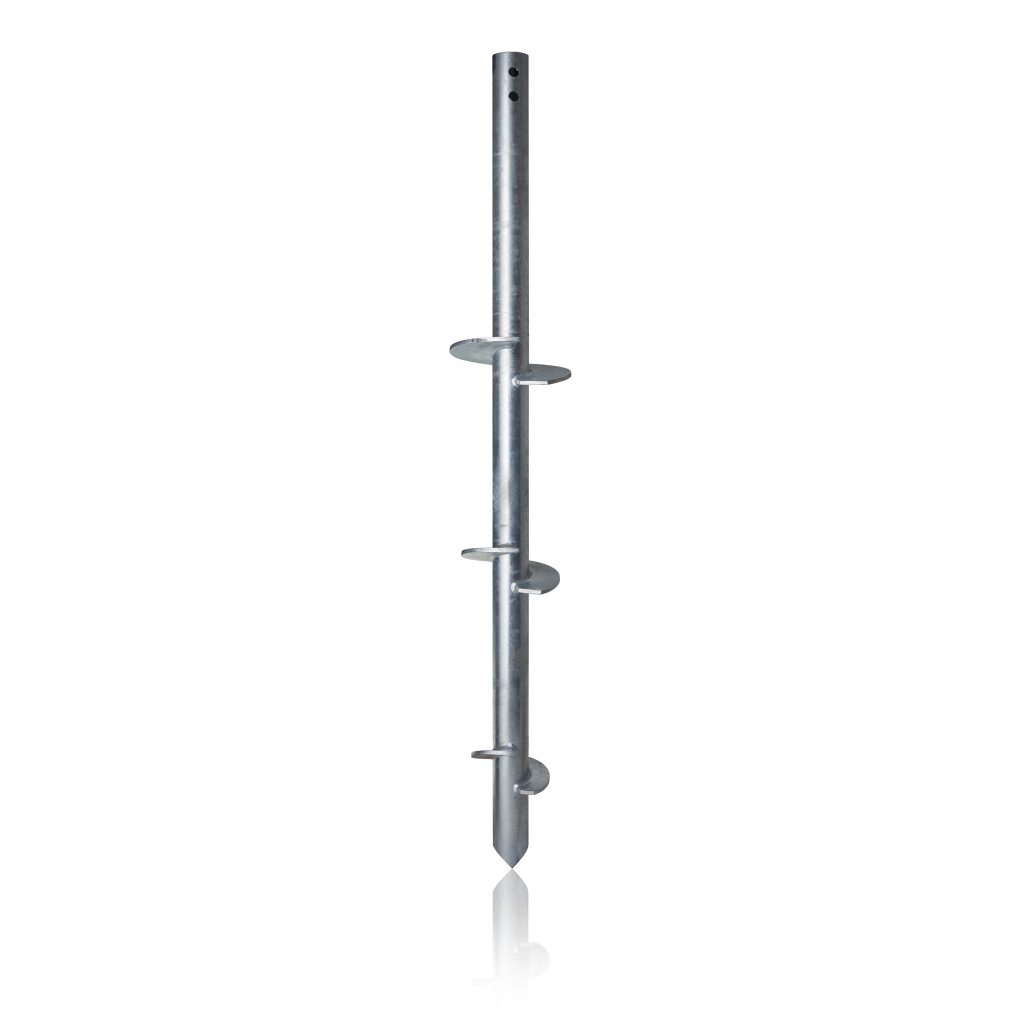
Helical screw piles consist of steel tubular shafts fitted with precisely welded helical plates, which are mechanically rotated into the ground in sections until the specified depth or required installation torque is reached to achieve the desired load requirements.

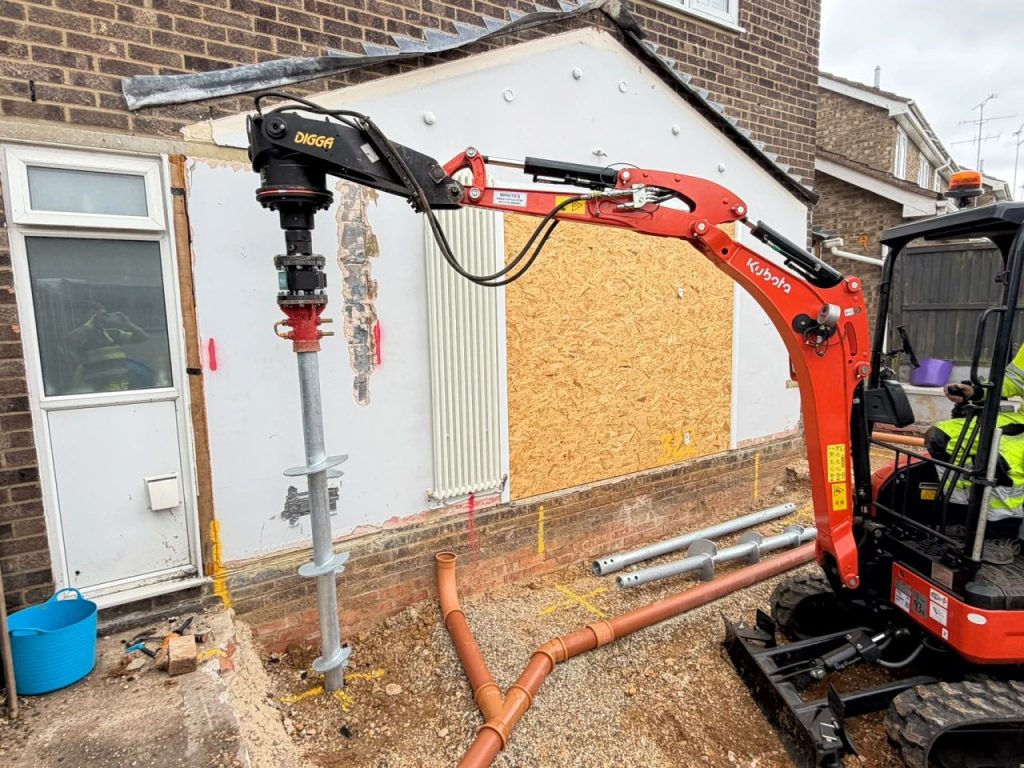
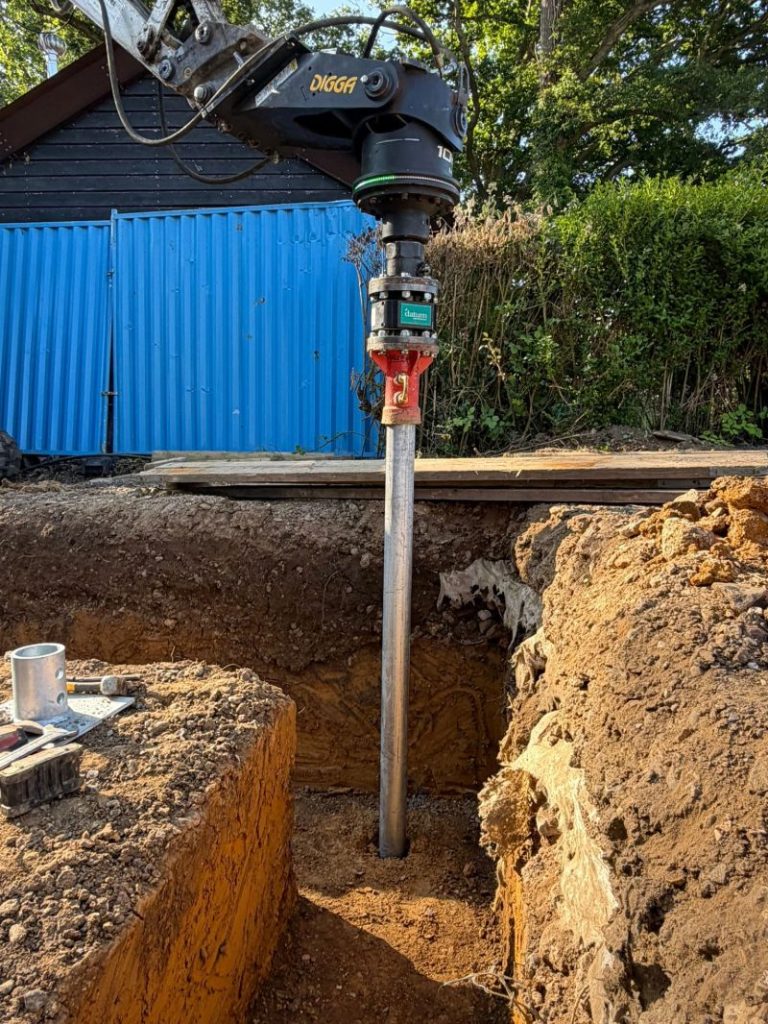
Installation is carried out using a tracked machine or excavator equipped with a rotary torque driver and integrated torque monitoring system, enabling us to measure, verify and record the performance of every pile installed.

What Screw Piles Are Used For

Screw piles bridge the gap between lightweight ground screws and heavy-duty commercial piling. They’re well-suited to a wide range of applications, including:

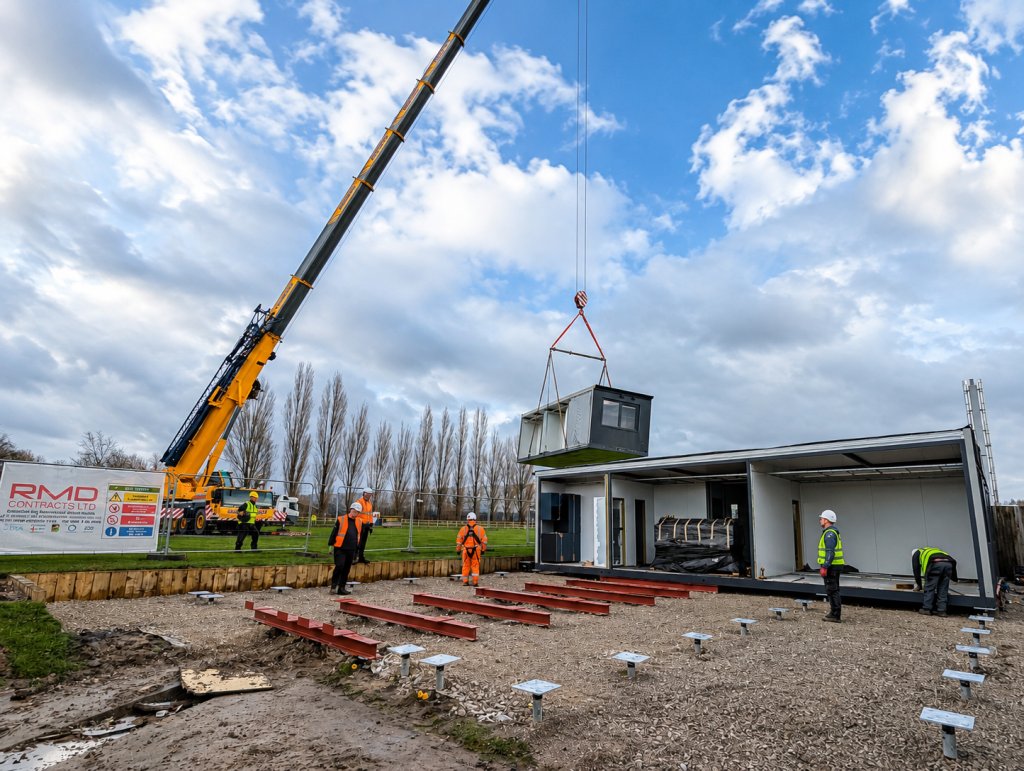
  • Modular buildings and portable classrooms
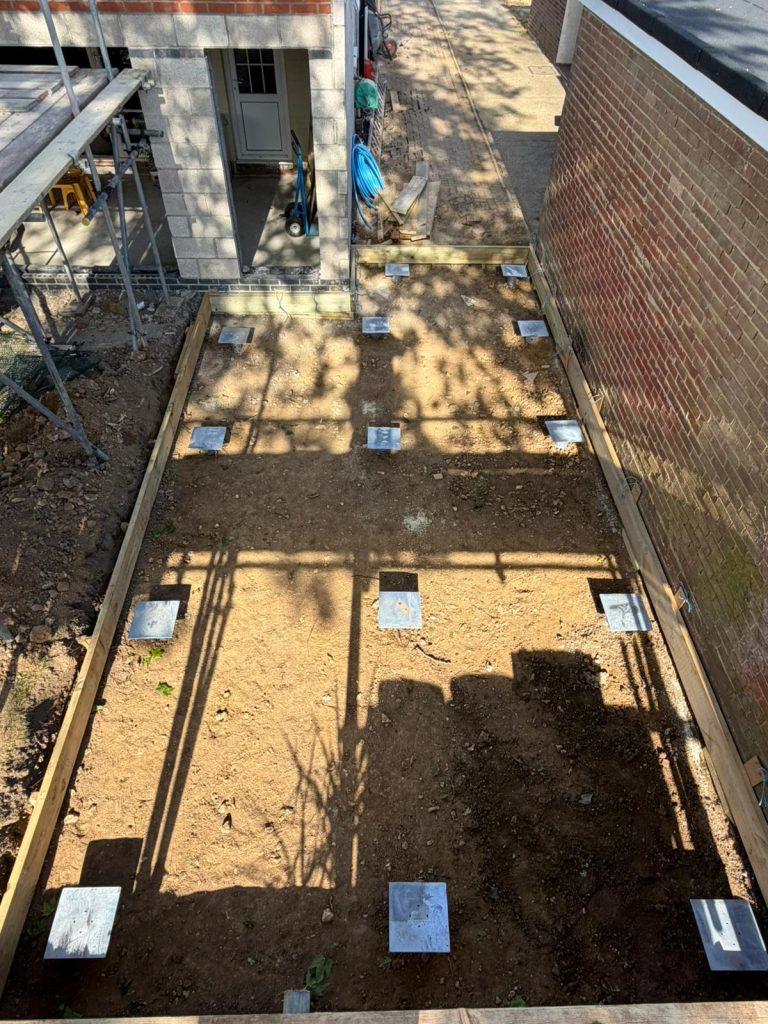
  • Residential houses and extensions
  • Solar farms and renewable energy installations
  • Commercial and retail units
  • Holiday lodges and glamping pods
  • Sports facilities and pavilions
  • Large-scale decking and boardwalks
  • Fencing and security perimeters
  • Under-pinning and retaining walls

They perform well in challenging ground conditions – including clay, sand, peat, and soft soils – and are particularly effective on sites where access is restricted or where traditional concrete foundations would cause too much disruption.

Why Choose Screw Piles Over Concrete?

Speed is an obvious advantage. Screw piles can be installed in hours and are immediately load-bearing. No formwork, no curing, no waiting. But the advantages go much further:

  • No excavation – no spoil to remove, no skips on site
  • Minimal vibration and noise – ideal for live environments like schools and hospitals
  • Fully reversible – remove them when the structure is no longer needed
  • Fewer site visits and shorter programme timelines
  • Cleaner projects with less waste management

For contractors, that means tighter programmes and simpler site logistics. For developers, it means lower costs and fewer issues with waste and remediation.

Our Screw Pile Range

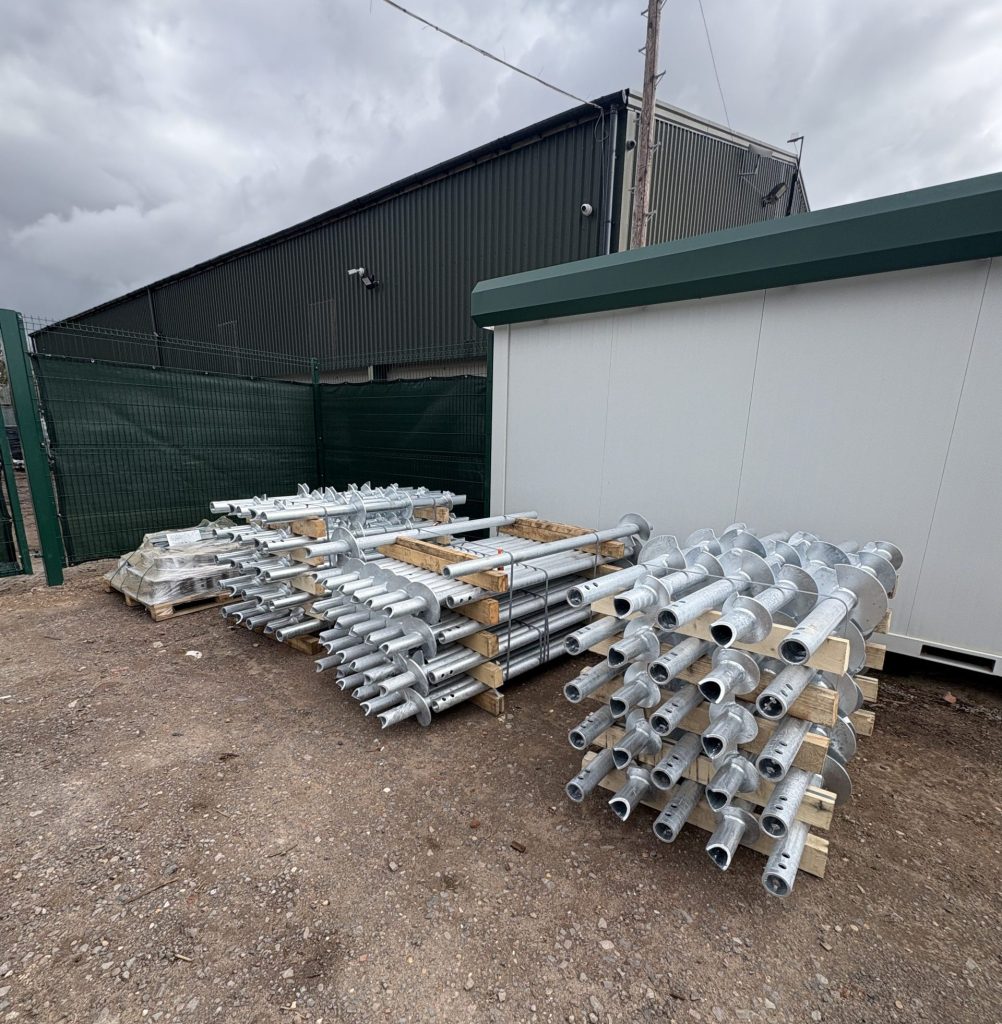
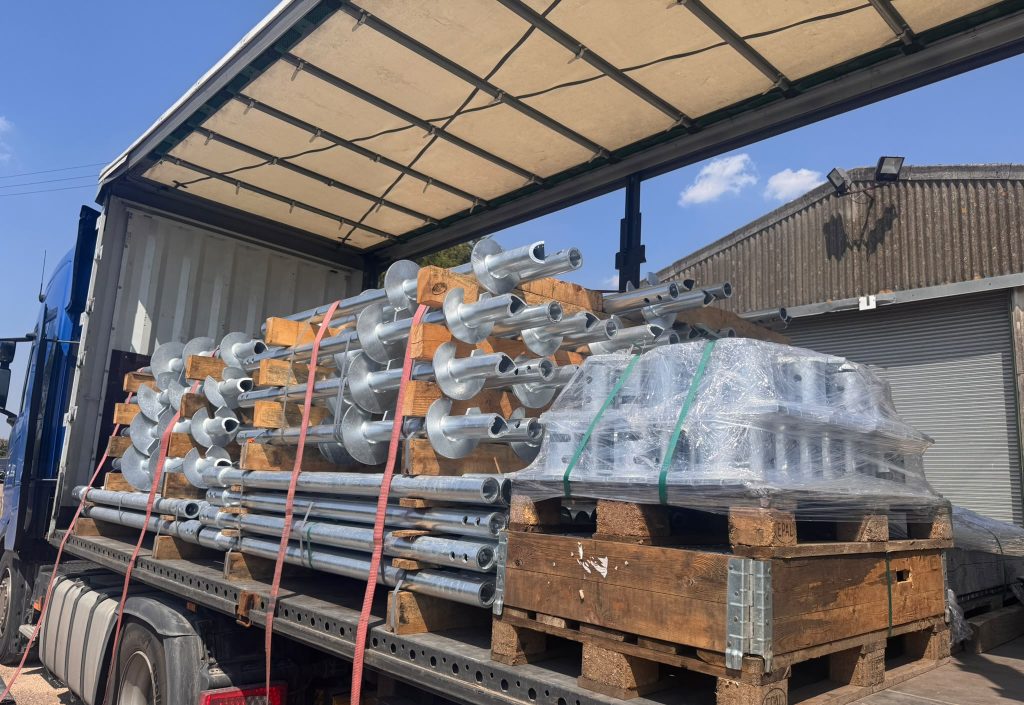
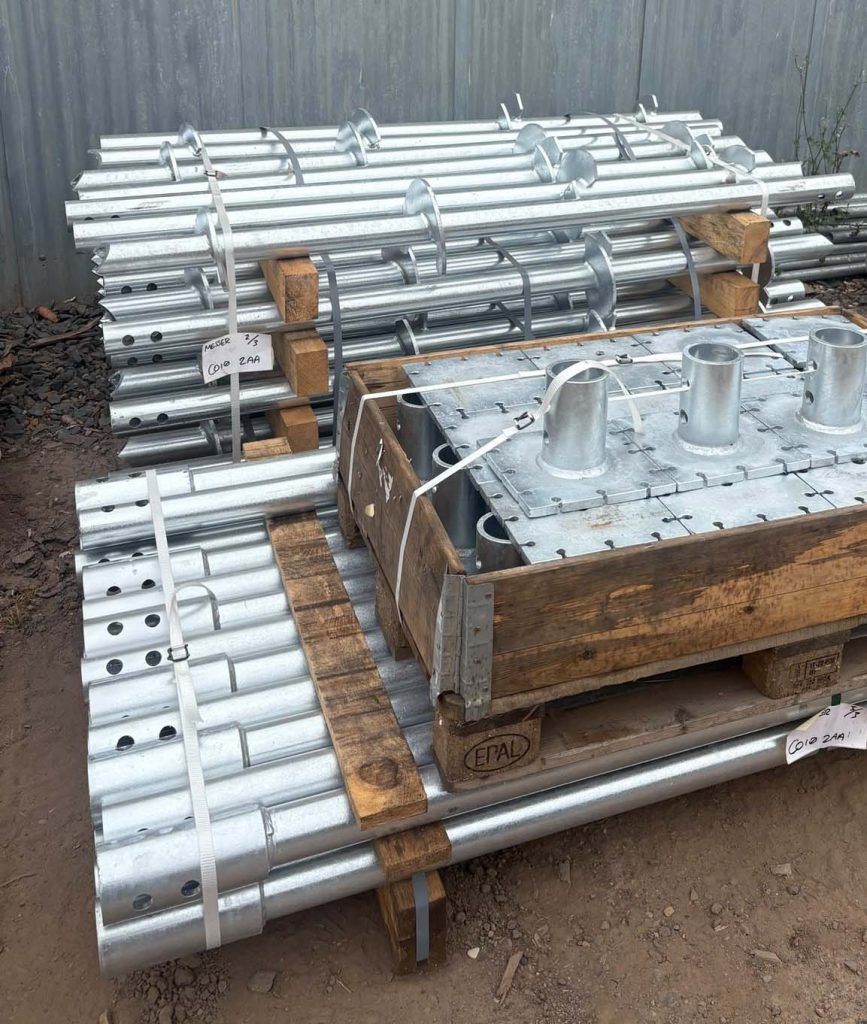
We carry a comprehensive range of screw piles in standard stock sizes – 76R and 89R with manufacturing capabilities for 114R, and 140R – ready for rapid dispatch across the UK.

For projects with specific site requirements, we design and manufacture bespoke screw piles to order, adjusting shaft size, helix configuration, length, and capacity to match the engineering specification.

All screw piles are manufactured to recognised standards, including:

  • EN 10025 – Structural steel
  • EN 10210 / EN 10219 – Structural hollow sections
  • ISO 3834 – Welding quality
  • EN ISO 1461 – Hot-dip galvanising
  • EN 1090-1 – CE/UKCA conformity
  • EN 1090-2 – Execution class EXC2 or EXC3 as applicable

How We Support Your Project

We offer product supply and technical guidance for contractors who install their own equipment, including hands-on installation training for teams new to screw piling.

For customers who want a fully managed solution, our experienced installation teams operate nationwide – handling everything from site survey, pile design, supply, installation and torque pile log.

Every installation is backed by a comprehensive torque pile log covering installation torque, depth, pile identification, and performance data. We also provide certification data from pile design foundation software, so engineers and building control have what they need without the usual back-and-forth.

What Is a Screw Pile?

A screw pile is a steel foundation that is screwed into the ground instead of being dug out and filled with concrete. It is made of a hollow steel shaft with one or more helical plates welded to it, which pull the pile down into firm ground and carry the weight of the structure above.

Think of it as a giant corkscrew. Turn it and it draws itself into the ground. Once it reaches firm soil, it holds.

What Are the Parts of a Screw Pile?

A screw pile has three main parts:

  • The shaft. A hollow steel tube that carries the load down into the ground. Longer piles are installed in sections, with extensions added until the design depth is reached.
  • The helical plate. The spiral disc welded to the shaft, also called a helix or flight. It isn’t a thread. It is a separate plate, and its size and number are chosen to suit the load and the soil. Some piles have several.
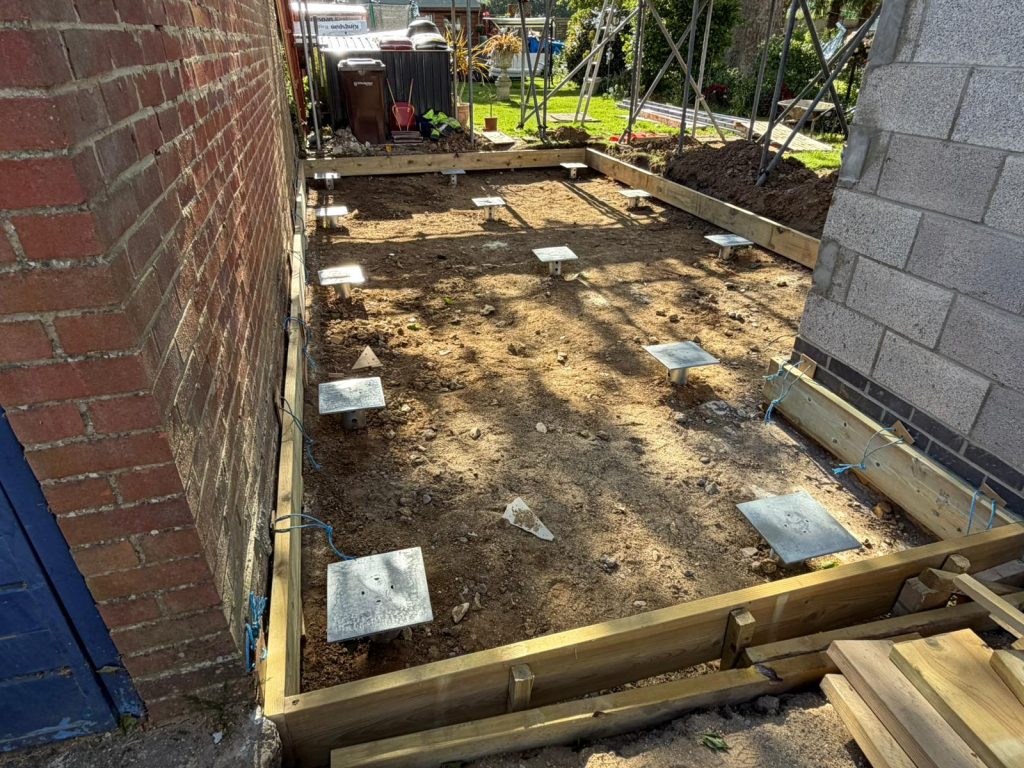
  • Top plate or termination bracket. The fitting at the top that connects the pile to the structure, whether that is a steel frame, a timber beam or a concrete ground beam.
  • Coupling. A structural socket connection designed to join adjacent screw pile shafts or secure pile caps using bolted fixings.

How Do Screw Piles Carry the Load?

Screw piles pass through soft or unstable topsoil and bear on firmer ground below, where the helical plates spread the load across a wide area of soil. Because the plates are locked into the ground, a screw pile resists being pushed down, pulled up and pushed sideways, which is why they suit masts, signage and solar arrays as well as buildings.

The other half of the story is torque, the turning force needed to drive the pile. The firmer the ground, the harder the pile is to turn. That resistance is measured and recorded throughout the installation, so it gives a reading of how much load each pile can carry, taken as it goes in.

This is the key difference from a concrete foundation. With concrete, the capacity is worked out on paper beforehand and rarely checked once it has set. With a screw pile, every pile produces its own record of performance on the day it is installed.

What Is the Difference Between Ground Screws and Screw Piles?

Ground screws are built for speed and lighter loads, and can often be installed by hand or with compact equipment. Helical screw piles are an engineered structural foundation, installed by excavator or tracked machine, and backed by recorded load data. Both work on the same principle, and the names are often used interchangeably.

There is a genuine overlap in the middle. A project that a large ground screw could handle might equally suit a smaller helical pile. The choice comes down to the load, the soil, site access and budget. If you are building a garden room, deck or shed, our ground screws are the place to start.

Are Screw Piles Better Than Concrete Foundations?

On most small and medium sites, screw piles are faster, cleaner and easier to verify than concrete. On very large, open sites, concrete piling can still work out cheaper, because the cost of bringing in a big rig is spread over hundreds of piles. The right answer depends on the job, and we will tell you honestly which suits yours.

When Are Screw Piles the Right Choice?

Screw piles come into their own when the ground near the surface is poor, when digging is restricted or expensive, or when the programme is tight. They are often the answer on sites where a concrete solution would be slow, messy or simply not allowed.

Typical situations include:

  • Shrinkable clay soils – where seasonal movement can damage shallow foundations
  • Made ground and fill – where firm soil sits well below the surface
  • Contaminated or brownfield land – where removing spoil is costly and tightly controlled
  • Root protection areas – including trees covered by Tree Preservation Orders, where digging near roots is not permitted
  • Sites near underground services – where piles can be positioned to avoid pipes and cables
  • Sloping or restricted-access sites – where using concrete is impractical
  • Live environments such as schools, hospitals and occupied homes, where noise, vibration and mess must be kept low
  • Tight programmes, where waiting for concrete to cure would hold up the build

How Are Screw Piles Installed?

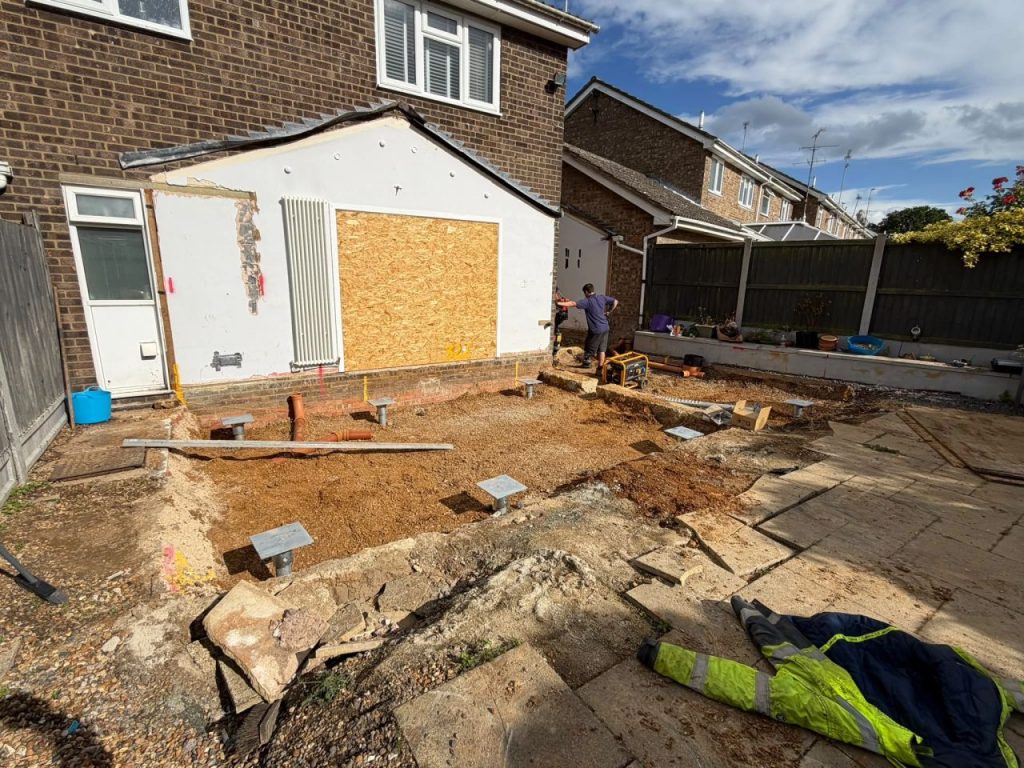
Screw piles are designed for the site, then driven into the ground by an excavator fitted with a rotary torque driver until they reach the design depth or torque. Most foundations are installed in a day or two, and building can start straight away.

  1. Share the project details. The structural loads, drawings and, where one exists, a site investigation report.
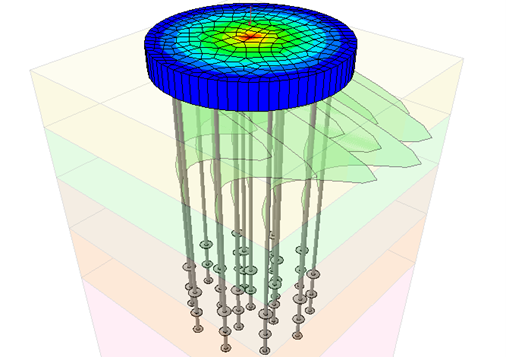
  2. Pile design. The number, size, depth and helical plate arrangement of each pile is worked out using pile design software.
  3. Set out. Pile positions are marked out on site.
  4. Installation. Each pile is screwed in, with extension sections added until it reaches the design depth or torque.
  5. Torque monitoring. The turning force is recorded continuously for every pile.
  6. Handover. You receive the torque pile log and design certification, with load testing where the design calls for it.

How Much Load Can a Screw Pile Carry?

There is no single figure. The capacity of a screw pile depends on the shaft diameter, the number and size of the helical plates, the depth, and the ground it is installed in. That is why every helical screw pile foundation is designed for its site rather than picked from a catalogue. Send us your loads and we will tell you exactly what your site needs.

How Long Do Screw Piles Last?

Our helical screw piles are hot-dip galvanised to EN ISO 1461 and have a design life of up to 120 years. How long any steel lasts in the ground depends on the soil contents, shaft thickness and thickness of galvanisation coverage so the pile design takes ground conditions into account.

Will Building Control and Structural Engineers Accept Screw Piles?

Yes. Screw piles are an established foundation method in the UK, and acceptance comes down to evidence. Each project comes with a pile design from foundation design software and a torque pile log for every pile, which is what your structural engineer signs off against and what building control reviews.

How Much Do Screw Piles Cost?

Screw piles are priced per project, because cost depends on the number of piles, their size and depth, the ground conditions and site access. When you compare with concrete, compare the whole job: no spoil removal, no skips, no curing time and a shorter programme often bring the total cost below a concrete foundation, even where the piles themselves cost more. Send us your drawings and we will give you a quote for the whole foundation.

Frequently Asked Questions About Screw Piles

How deep do screw piles go? As deep as the design needs. Helical screw piles are installed in sections, so extensions can be added until the pile reaches firm ground or the required torque.

Do screw piles work in clay? Yes. Clay is one of the most common reasons to choose screw piles, because they can pass below the zone where clay shrinks and swells with the seasons.

Can screw piles be used for a house? Yes. Helical screw piles are used for new houses and larger extensions, particularly on clay, made ground or sites with trees nearby.

What machinery is needed to install screw piles? An excavator or tracked rig fitted with a rotary torque driver. The size of machine depends on the pile, from compact excavators for smaller piles up to around 13 tonnes for 140 mm piles, so access is checked at the design stage.

How quickly can screw piles be installed? Most foundations take a day or two, depending on the number of piles and the ground. They can be built on the same day.

Can screw piles be removed? Yes. They can be unscrewed and reused, which makes them a good fit for temporary buildings and sites that may change use.

Can I install screw piles myself? Helical screw piles need the right machinery, torque monitoring and training. We work with and supply contractors who already install piles and train teams who are new to it.

Do you install screw piles nationwide? Yes. We supply and install across England, Scotland and Wales.

Understanding Screw Piles: A Complete Guide

Talk to Us About Your Screw Pile Project

Whether you are a structural engineer specifying a foundation, a contractor pricing a job or a project manager with a tight programme, send us the loads, drawings and any site investigation report. We will come back to you quickly with a screw pile design and a quote, and you will deal with someone who understands the engineering from the first call.