


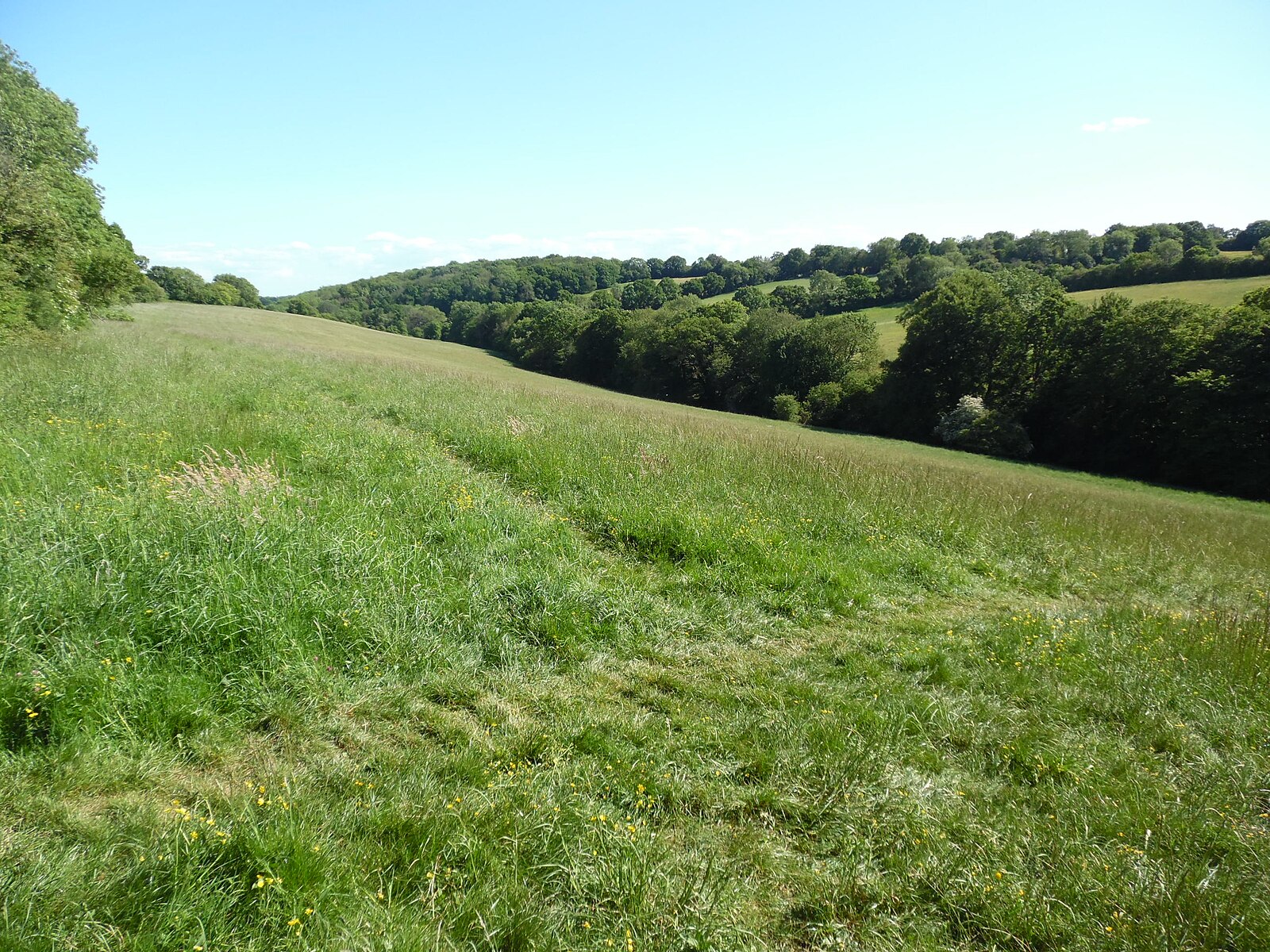
Ground screws are great for sloping ground
Ground screws are great for sloping ground
Most people look at a sloped garden and think “there goes my building project.”
However, fear not, as ground screws offer a flexible solution that tackles sloping ground remarkably well compared to other foundation methods.
Ground screws can be installed at varying depths across your site, allowing each one to reach stable ground while the exposed sections create a level platform above. The important bit: you don’t need to dig up your space.
This is a true game-changer – think garden rooms positioned for good views, decking that follows your garden’s natural shape, even larger buildings can be installed on less-than-flat sites.
Of course, there are a few nuances and best practices to follow. This guide covers installing ground screws on slopes, from measuring your site through to getting everything perfectly level.
Sloping sites are often viewed as a complication for traditional foundations, requiring cut-and-fill, poured concrete, retaining walls, or costly groundwork to create a level base.
You can’t just pour concrete on a slope and hope for the best. Due to its considerable weight, it always seeks a level surface. In almost all eventualities, laying concrete bases on slopes requires:
The steeper your slope, the more dramatic these costs become. However, even slight slopes can pose major issues, especially in relatively small areas that may be too confined to level.
Each screw is driven to the required depth to reach stable, load-bearing soil, and a perfectly level base is laid on top. Here are the benefits:
Once installed, you’ll have a structurally sound, building-ready base without the time, cost, or environmental impact of groundwork. No digging required!
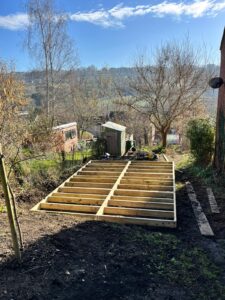
Ground screws adapt to your terrain rather than requiring you to change it. Each screw can be installed to different depths, with varying amounts of shaft remaining above ground, while still creating a perfectly level foundation platform.
The key concept is the install range – the maximum amount of screw that can remain above ground. The higher the install range, the more flexibility you have on slopes.
For our self-install screws:
So, if your slope drops 250 mm across the build area, you’ll need the 1,100 mm screws to ensure both adequate depth into the ground and enough shaft left above to level with the other screws.
You can always leave more screw above ground (within limits), but you can’t add length. So it’s better to go longer than too short.
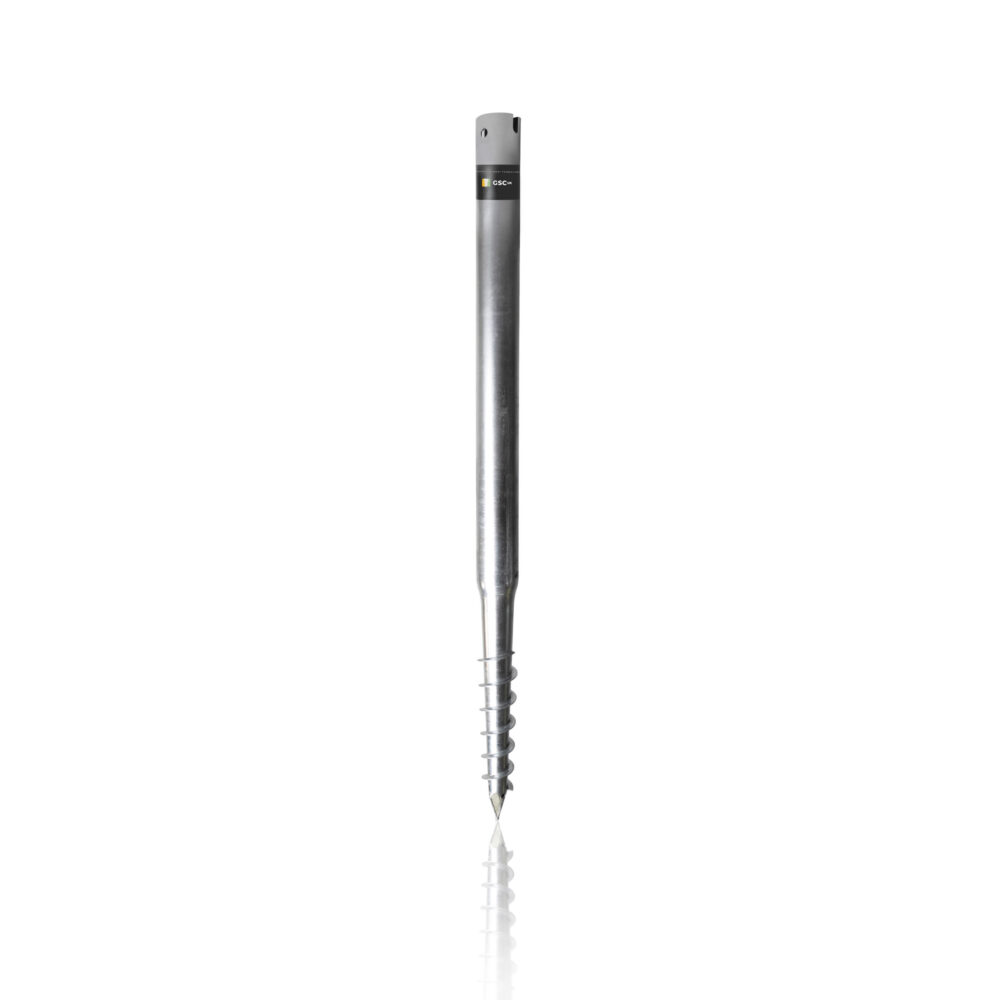
Beyond the 300mm height difference, you need professional installation with our commercial-grade screws. These longer, heavier-duty options provide the stability and adjustment range for steeper slopes:
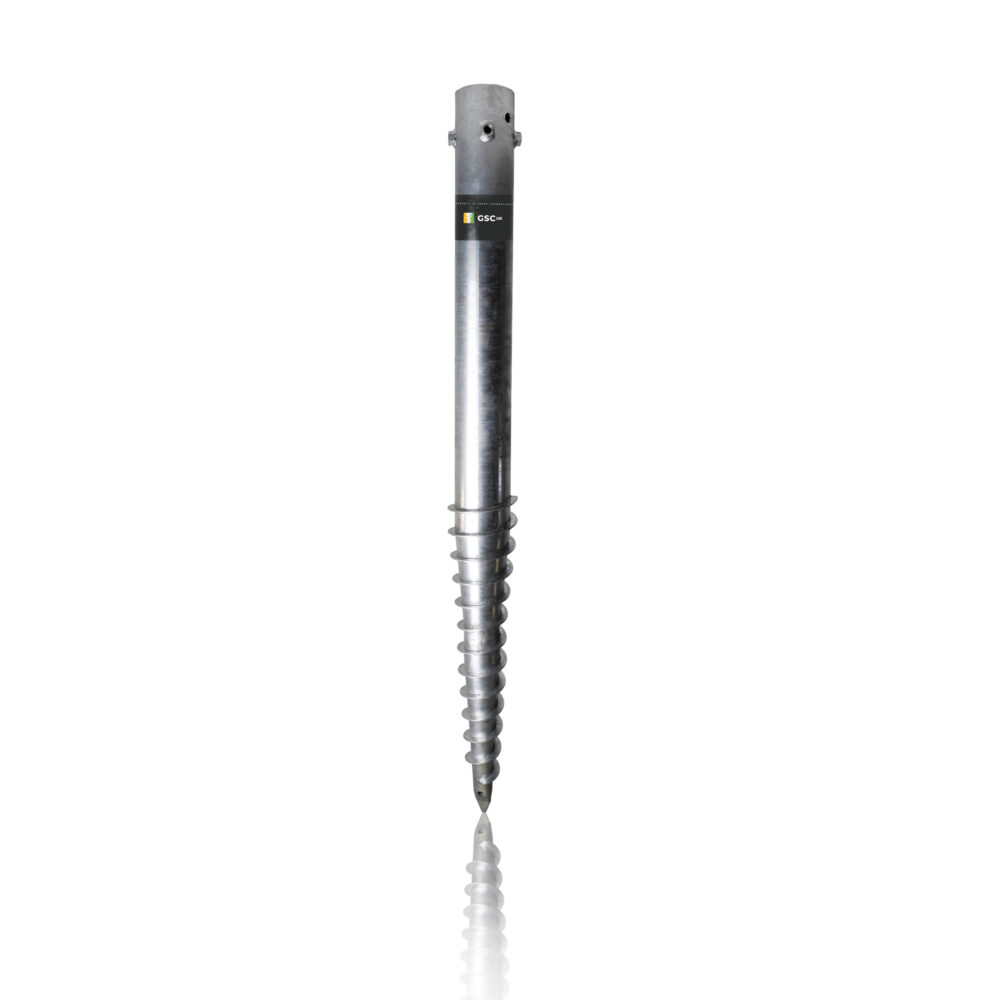
When we install commercial ground screws, we’ll inspect your site to understand how to navigate its slopes.
We should also mention that your bracket choice matters more on slopes than on flat ground, as adjustable systems provide some leeway for fine adjustments.
Installing ground screws on a slope isn’t overly complicated – but it does require precision.
You’re dealing with varying ground levels, inconsistent soil, and the pull of gravity. Follow these steps for consistent results:
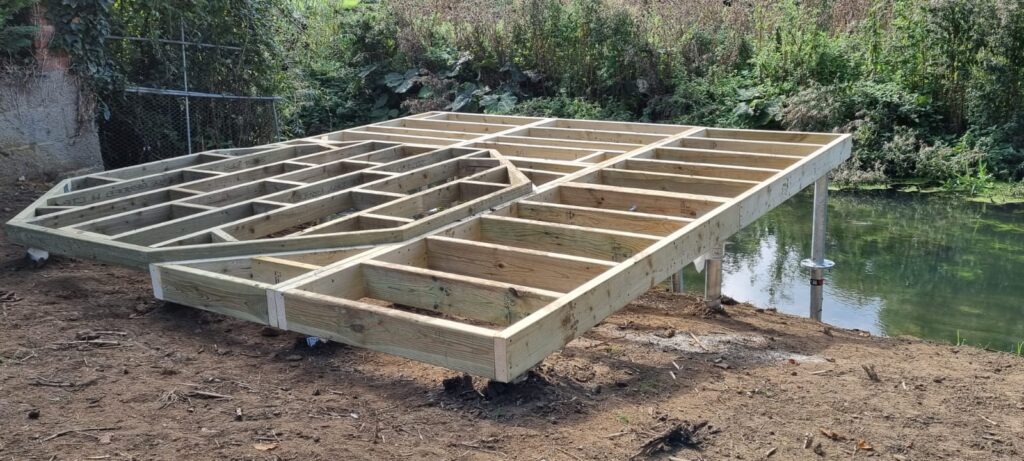
Professional installation shows its worth for sloping sites. Ask the GSC team for advice if you’re unsure about how to install ground screws on your site.
Soil conditions can change across a slope. Higher areas are typically firmer and drain well; you may need more torque or a ratchet tool to install screws here.
Lower sections tend to be softer from water runoff, which means screws go in more easily but may need to be longer to reach stable, load-bearing ground.
Pay attention to resistance. If a screw installs with very little effort or keeps turning without a firm grip, it probably hasn’t reached solid ground. In that case, it may be necessary to move the position slightly or switch to a longer screw.
Slopes don’t stop you building – not with the right foundation system. Ground screws adapt to uneven terrain without excavation, creating stable, level platforms where concrete would be costly and disruptive.
For DIY projects with a height difference of up to 300 mm, our self-installation range handles most slopes.
Steeper gradients benefit from professional installation. Our team brings over 15 years of experience across all terrain types, utilising specialist equipment and load testing to ensure compliance and peace of mind.
Ready to tackle your slope? Here’s what to do next: