



Building modular classrooms with ground screws
Building modular classrooms with ground screws
When schools need extra classroom space, they often face a trio of challenges: tight deadlines, limited budgets, and busy spaces that can’t afford major disruptions.
Modular classrooms have exploded in popularity – partly due to the above constraints and partly in response to the RAAC crisis (more on that shortly) – offering space without lengthy construction times and high costs.
However, while modular classrooms are quick and simple to erect, their performance and durability still rely on excellent foundations.
There are a few foundation options available, from concrete slabs to steel base plates – and determining the best choice can be a challenge.
In this article, we’ll explore the challenges of installing temporary classrooms and the foundation options available, together with their advantages and limitations.
School buildings across the country are in a state of crisis and decline.
Many of them were built decades ago, and they’re simply not up to scratch anymore. It’s a problem that’s been brewing for years, but recently, it’s come to a head.
In response to growing student numbers, many schools expanded with the use of reinforced autoclaved aerated concrete (RAAC) in school buildings.
RAAC was cheap and easy to work with, but as you’ve probably heard, that came with consequences.
As RAAC buildings age, they become increasingly prone to structural failure. In recent years, several schools have experienced sudden roof collapses due to RAAC degradation, putting students and staff at risk.
The government has advised schools to close affected buildings until they can be repaired or replaced, but with over 230 schools identified as having RAAC, the scale of the problem is immense.
So, why not just rebuild using traditional methods? Well, it’s not that simple. Conventional construction, using materials like concrete, is often:
In short, traditional construction methods simply aren’t well-suited to the urgent need for safe, modern classroom spaces.

Modular classrooms offer an effective alternative. These innovative, prefabricated structures offer a fast, cost-effective, and flexible solution to the school capacity crisis.
Once built, the modular units are transported to the school site and assembled in a matter of days or weeks, rather than months or years. Modular buildings are also highly customisable and have lower carbon footprints than conventional buildings.
The government has recognised the importance of modular classrooms, awarding contracts of £35 million to support school rebuilding and expansion.
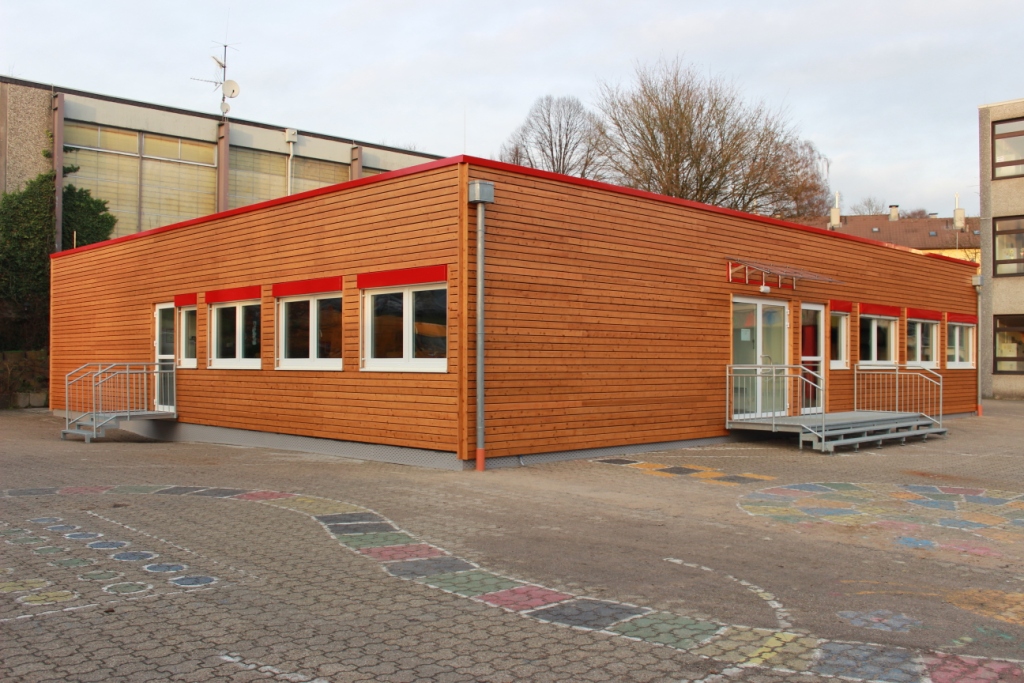
While simple to install, modular classrooms still require well-made foundations. Without them, they risk structural problems that threaten their durability and longevity.
Let’s review the main options:
Concrete is a popular foundation choice for modular buildings, offering durability and straightforward installation. Depending on the project, contractors may support the structure with a full concrete base, pre-cast blocks, or poured pads.
While concrete provides a solid foundation, it doesn’t always suit the nature of modular construction. Modular buildings are designed for efficiency and rapid deployment, so spending time on site preparation, curing, and levelling often negates the speed advantage.
In many cases, alternative systems – such as ground screws or steel frame foundations – offer a faster, more adaptable solution.
If you’re looking for a foundation that provides a bit more stability and support, a concrete ring beam might be the way to go.
This involves digging a trench around the entire perimeter of the building, adding some steel reinforcement, and then pouring a continuous strip of concrete.
While time-consuming, ring beams offer a sturdy, long-lasting base for modular buildings when disruption isn’t a huge issue.
For a foundation that offers a bit more flexibility and customisation, consider adjustable jack pads. They use a combination of concrete pads and steel supports that can be adjusted to level out the building.
Jack pads are a popular choice for temporary classrooms and site offices because they can adapt to moderate slopes and provide some wiggle room for future adjustments.
However, they still require careful site preparation to ensure proper drainage and stability, and are time-consuming to lay properly.
Steel base plates are large, flat plates designed to spread the weight of the building evenly across the ground, making them a good fit for softer soil conditions.
They’re well-suited for temporary installations where extensive ground preparation isn’t feasible. Some modern versions even come with built-in levelling systems for added convenience.
On the downside, the ground beneath the plates needs to be reasonably flat and stable and wet conditions can reduce stability and cause shifting.
For a foundation option that offers speed, stability, and accuracy, ground screws are ideal.
These innovative foundation systems use large, engineered steel screws that are drilled into the ground, creating highly stable mounting points that can be individually adjusted for spot-on levelling.
A typical ground screw foundation includes:
The beauty of ground screws is how quickly and precisely they can be installed. In many cases, a whole foundation can be done in just a matter of hours, even on challenging sites.
And thanks to the adjustable brackets, you can achieve a perfectly level base every time.
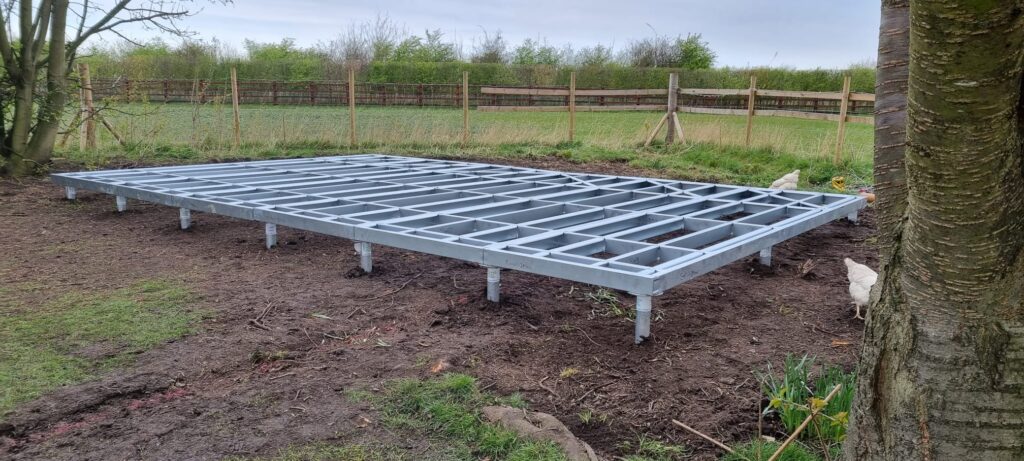
Ultimately, the best foundation for your modular classroom will depend on your specific needs, site conditions, and budget.
Concrete blocks and ring beams offer familiarity and long-term durability, while jack pads and steel plates provide flexibility and load-spreading capabilities.
However, if speed, precision, and versatility are top priorities, it’s hard to beat the convenience and performance of a ground screw system.
In short, ground screws offer a fast, adaptable, and reliable modular foundation solution.
They provide solid, long-lasting support without the hassle of digging, curing, or extensive site disruption.
Here’s why they’re an ideal choice for modular classrooms:
Ground screws can be installed in a matter of hours. The ground screws are driven into the ground using specialised equipment, eliminating the need for large-scale digging or concrete pouring.
A rapid installation process means you can have your modular classroom up and running much sooner, minimising disruption to your school schedule.
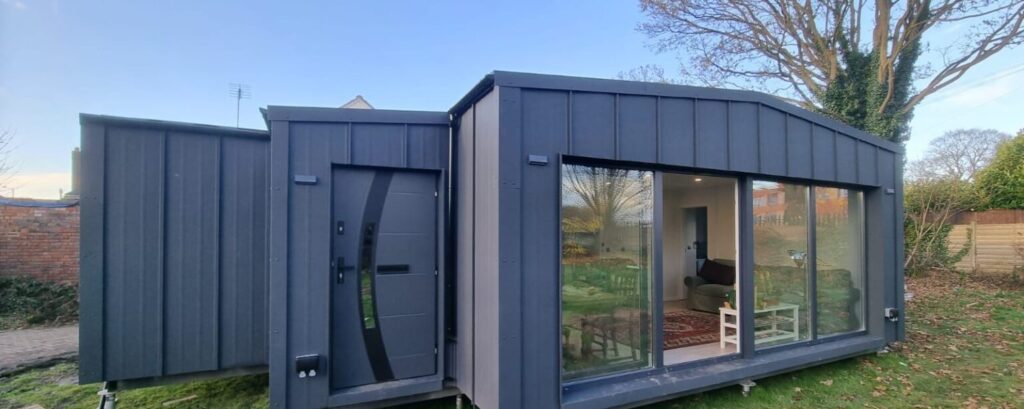
Ground screws offer unparalleled precision and adaptability when it comes to creating a level foundation. Each screw can be individually adjusted to the exact depth and angle required, ensuring a perfectly even base for your modular classroom.
This is particularly crucial for modular buildings, as they require a stable and level foundation to ensure proper alignment and long-term structural integrity.
Construction projects on school grounds can be highly disruptive. Noise, debris, and constant contractor activity generally contribute to what might already be a chaotic environment!
Ground screws offer a much more discreet and less disruptive installation process compared to traditional foundation methods. Installing them is relatively quiet, and the process is clean, with minimal excavation and no concrete mixing required on-site.
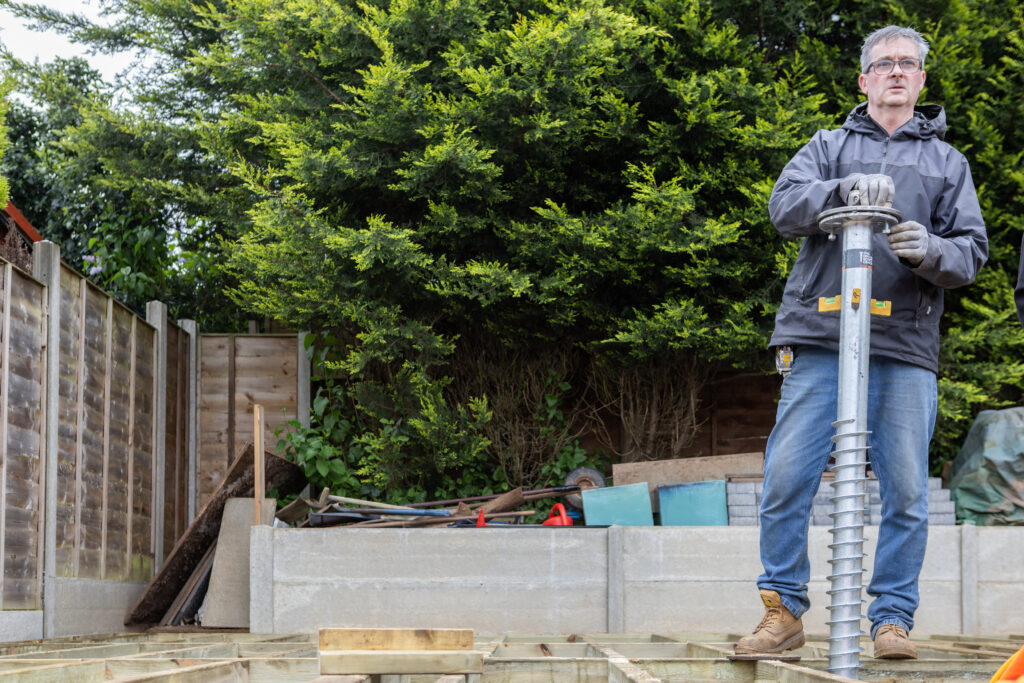
When environmental sustainability is a priority, ground screws are a fantastic choice.
Unlike concrete foundations, which have a high carbon footprint due to the energy-intensive production process and the large amounts of waste generated, ground screws are an exceptionally eco-friendly alternative.
Ground screws require less heavy machinery during installation, reducing fuel consumption and emissions. They can also be removed and sometimes even reused if your needs change in the future, minimising waste and environmental impact.
As we’ve seen, modular classrooms and ground screws are a perfect match – offering a faster, more efficient way to expand learning spaces without the delays and disruption of traditional foundations.
At Screw Foundations UK, we bring 15 years of expertise to modular construction, ensuring every screw is installed to exact specifications.
Here’s how we can help:
If you’re planning a modular classroom, we’d love to help. Get in touch today to discuss your project and find the perfect foundation solution for your school.