


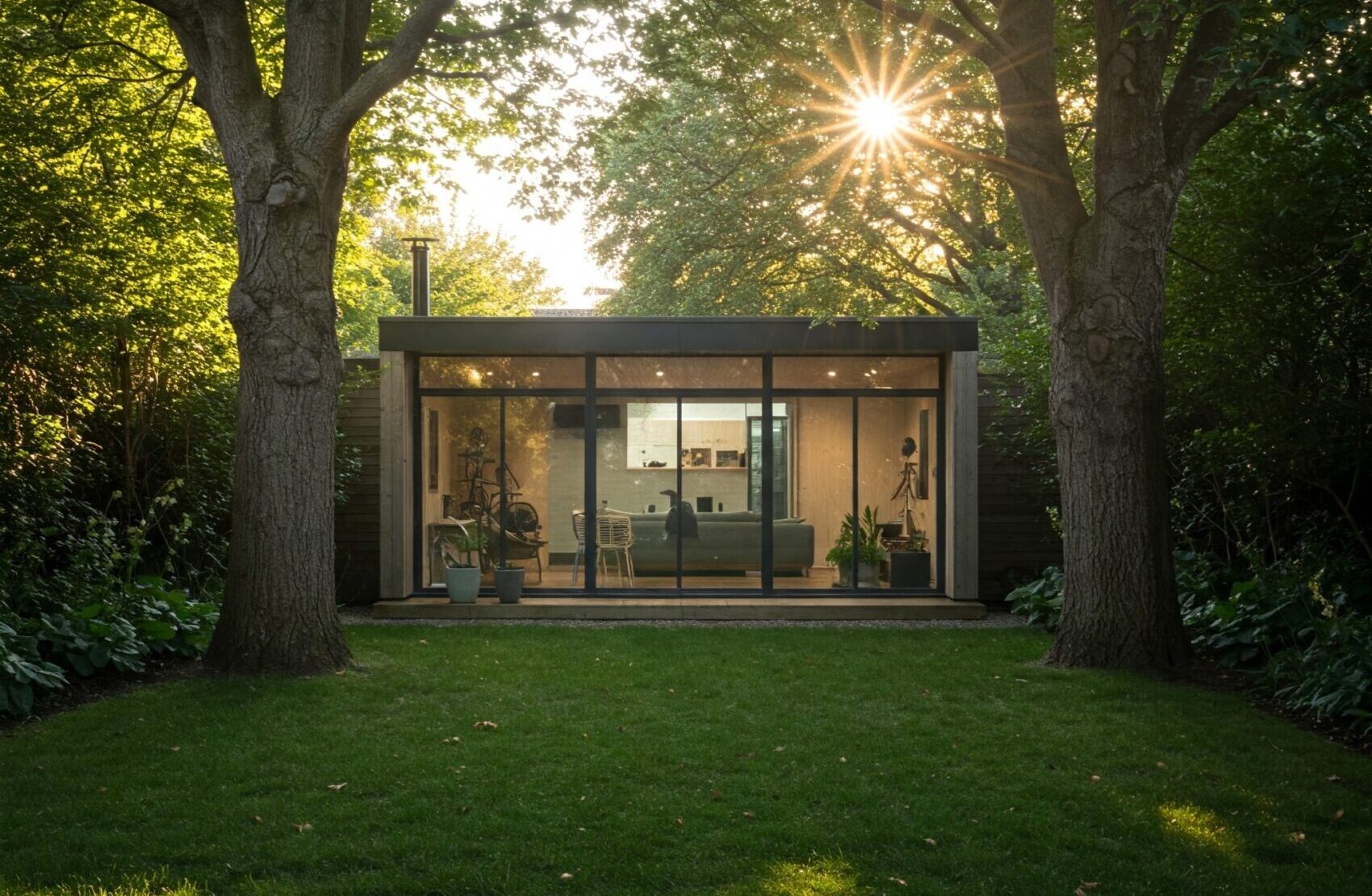
Trying to navigate a Tree Protection Order (TPO)?
Trying to navigate a Tree Protection Order (TPO)?
Looking to build near trees? You may face a common and frustrating challenge: creating stable, long-lasting foundations without harming the roots.
Traditional concrete foundations require extensive excavation – precisely what you want to avoid when building near established trees. Damaging roots doesn’t just harm the trees; it can also void Tree Protection Orders, which is a criminal offence.
Ground screws are a great alternative that suits tree-friendly construction. They can be installed around trees and their root systems and are far more resilient as the tree shifts and grows.
In this guide, we’ll explore the challenges of building near trees, compare different foundation options, and explain why ground screws are a brilliant choice for projects where tree preservation matters.
Trees are notoriously awkward to build around. Their sprawling root systems, impacts on soil moisture, and growth over time all pose issues for foundations – before you factor in any Tree Preservation Orders.
Let’s dig into those challenges in more detail:
Many valuable trees in the UK have legal protection through Tree Preservation Orders (TPOs) or conservation area designations.
If you want to build around trees, you’ll need to check with your local planning authority to determine if nearby trees are protected. If they are, you’ll need permission prior to carrying out any work.
The consequences of ignoring a TPO can be severe, and councils are known to pursue them quite actively if they suspect an offence:

So, ignore trees at your peril. Even without formal protection, most local planning policies expect you to be considerate of tree preservation for any building project.
Working with trees rather than against them isn’t just environmentally responsible – it’s often a planning requirement.
Concrete is the go-to for foundations. Concrete bases, jackpads, and concrete blocks require substantial excavation work that’s simply not suitable when building near established tree roots.
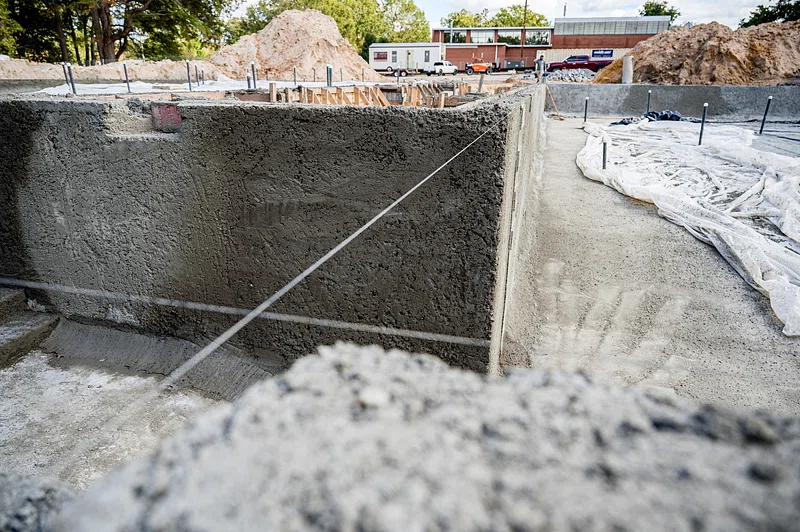
Notwithstanding the immediate damage, traditional foundations can initiate long-term conflicts between the building and the growing tree. As roots continue to develop and soil moisture levels fluctuate seasonally, pressure can build on rigid concrete structures.
In addition to the above, poorly considered foundations can damage the trees’ natural growth patterns in the long term.
For example, if you block tree growth in one direction by damaging, killing or obstructing roots, it may compensate by growing in a different direction.
If that’s towards another building, pathway, or other structure, it could spell disaster!
Trees constantly interact with the soil around them. In clay soils, which are common across much of the country, trees draw significant moisture during growing seasons.
This can shrink the soil, leading to settlement issues for proximate structures. Conversely, if a tree is removed after a building is constructed, the soil may swell as it retains more moisture, causing heave.
These seasonal movements are most pronounced in the area defined as the Root Protection Zone – typically calculated as a circle with a radius 12 times the diameter of the tree trunk (measured at 1.5m above ground level).
Standard concrete foundations within this zone are often stressed by:
This constant, powerful cycle of movement explains why many conventional foundations near trees eventually develop problems, even when they’re stable at project completion.
So, what alternative foundation methods are there for near-tree construction?
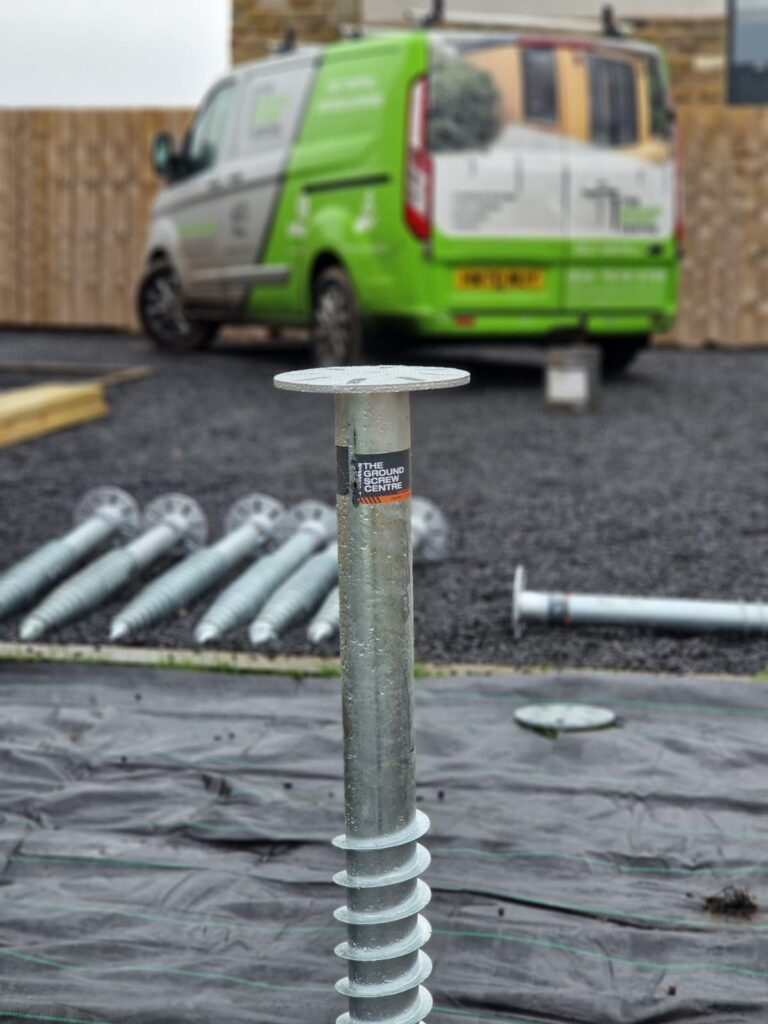
Ground screws provide an excellent solution that offers exceptional structural support while minimising impact on tree roots. They take the form of large steel shafts with helical flights (like a corkscrew or wood screw) that are driven into the ground to create foundation points.
Typically made from galvanised steel for durability, ground screws come in various lengths to suit different soil and load conditions.
Once installed, brackets are attached to the top of each screw to connect with your timber frame, decking, or other structure.
Ground screws are specifically designed to create minimal disturbance when installed – ideal for use near tree roots.
Unlike concrete foundations that require extensive excavation, ground screws are rotated into position, gently displacing soil rather than removing it completely.
Of course, the benefits do hinge around proper installation, which involves carefully marking positions that avoid major roots, then using either handheld equipment or small machinery to rotate each screw into place.
If you locate a substantial root during installation, it’s quite straightforward to adjust on the spot – which is impossible to achieve with rigid concrete foundations.
Here’s a closer look at the benefits of ground screws for construction near trees:
With these benefits in mind, many arborists and planning authorities now specifically recommend ground screws when building near protected trees.
When installing ground screws near trees, the details matter. Adopting a few tried-and-tested best practices will give you a sturdy foundation while protecting valuable root systems from damage.
Here are our top best practices to keep in mind:
When you’re working near large or mature trees, how you drive in the screws really matters. Apply steady, even pressure and rotation rather than forcing through any resistance. If you hit something solid that might be a root, it’s better to reposition slightly than power through.
For sites with particularly valuable trees, consider using a smaller pilot hole first to check for root obstructions before installing the full ground screw.
While many DIYers successfully install ground screws, professional installation offers peace of mind and assists proper compliance with TPOs.
At Screw Foundations UK our experienced installation teams specialise in tree-friendly foundation solutions, bringing over 15 years of experience to ensure your foundation is stable and secure without harming a single root.
We offer both domestic and commercial installation services for projects of every size.
Redrow Homes needed a secure perimeter railing for a new London development located within a protected Tree Preservation Order (TPO) area. Traditional concrete foundations would have damaged critical tree root systems, breaching preservation guidelines.
We installed 21 x 114mm x 2100mm ground screws, strategically placed to avoid root damage, eliminating the need for excavation and concrete.
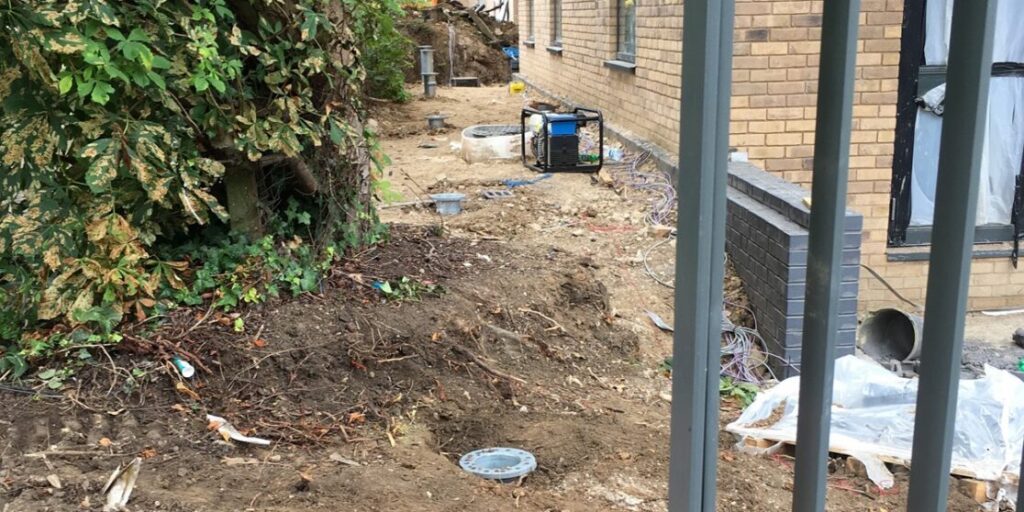
The ground screws were easily adjusted to varying heights due to uneven terrain, providing a stable, level foundation for the perimeter railing.
The completed installation highlights ground screws as the ideal solution for boundary projects within environmentally sensitive areas.
Read the full case study here.
When building near trees, your foundation choice makes all the difference between a successful project and potential problems. Ground screws have proven themselves as an excellent solution that balances structural requirements with tree preservation.
By choosing ground screws, you help maintain healthy conditions for tree roots while providing reliable support for your building. Their quick installation and minimal equipment requirements further reduce the impact on your site.
GSC UK has helped thousands of customers successfully build near trees using our high-quality ground screw system.
Our team can advise on the right screws and brackets for your specific project and tree protection requirements.
Ready to start your tree-friendly building project? Use our Ground Screw Calculator to determine exactly what you need, or contact our friendly team for personalised advice about your specific situation.